


Part One: Spiritually Restless
Part Two: Witches, Wildflowers, and the Things We Still Believe
In every area of my life, I’ve always looked for the little things.
As a child, my favorite books were the ones with secrets hidden inside the pictures. A tiny mouse tucked onto every page. Little details that told another version of the story if you looked closely enough. Something to find, like I was being let in on a secret.
I think that’s why I love Taylor Swift’s music so much, too. I remember that feeling of being 16 and feeling the songs like they were written for me. The codes, the Easter eggs, the feeling that one thing can quietly connect to something else. My husband, kids and I search for them in Disney movies, too, and there’s something so fun about realizing two different worlds have been connected all along. Like seeing Rapunzel and Flynn Ryder standing outside of the castle in Frozen.
That’s what crystals feel like to me.
A connection to another world.
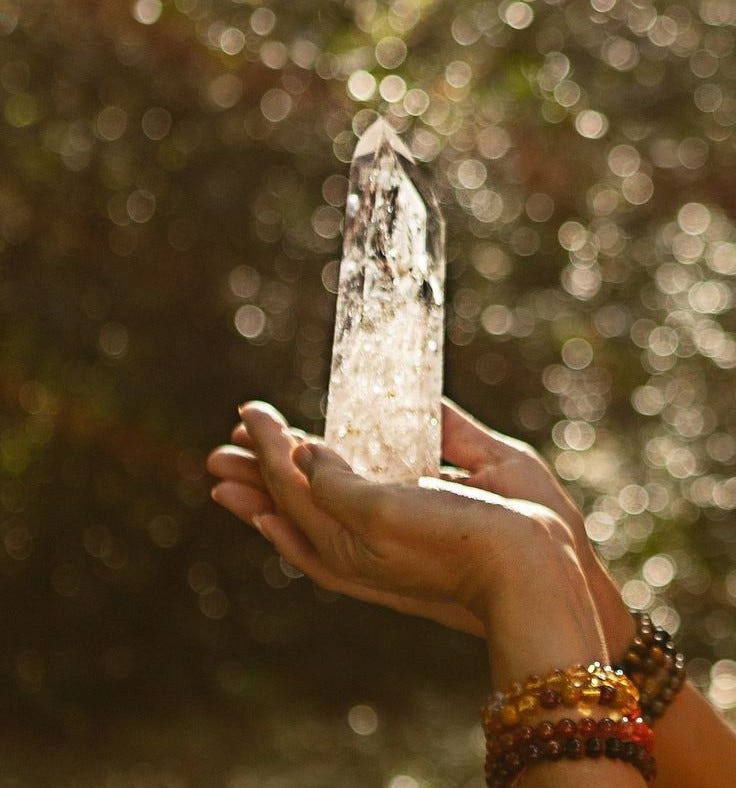
I started loving crystals for the same reason I’ve always loved the little things in nature. The way moss grows over stone like it’s blanketing something hard. Sunshine dappling through green leaves and making everything feel golden. The way rain rolls in with heavy clouds and wind that makes everything smell alive again. How the moon can change the mood of an entire night without saying a word.
The little things all around us that seem to mean more than they should. I recently wrote a book called Beauty in Little Things, and I think that title says more about me than I realized at first. Maybe I’ve always been searching for meaning in the ordinary. In the small details. In the things easy to miss if you’re moving too fast.
And crystals feel like that to me.
Before crystals were aesthetic objects on windowsills, before they were tucked into bra cups (guilty) and placed beside tarot decks and arranged on bedside tables, they were part of the earth’s oldest language.
Stone, pressure, heat, and time.
Something buried became beautiful. Something under pressure became clear. Something made in the dark still catches the light. Like what? I don’t know how to hear that and not feel something towards them. Is this why people have loved crystals for as long as we’ve existed?
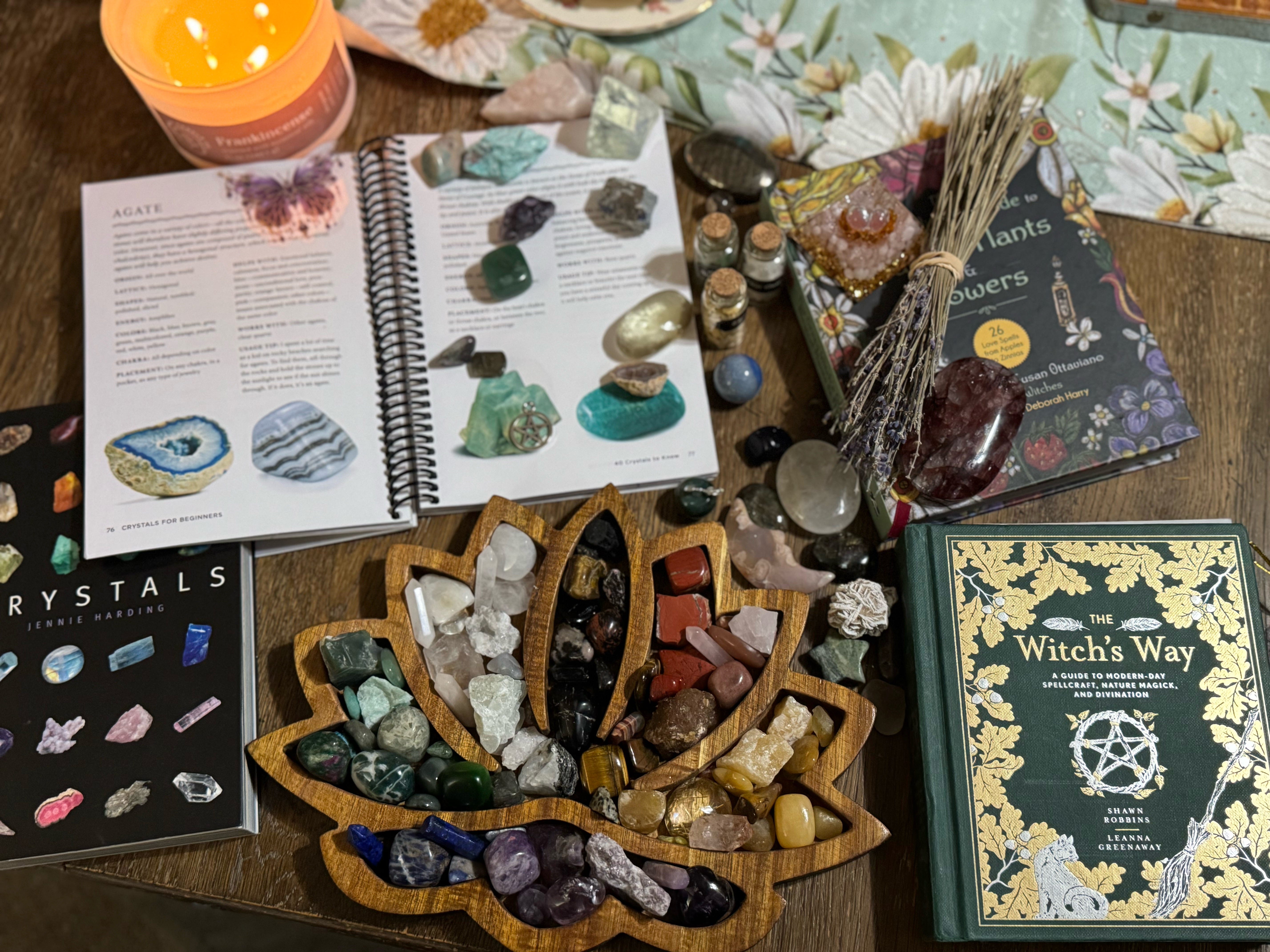
I remember being a kid visiting my Nana in Helen, Georgia, walking into one of those little shops that smelled like lavender, wood, and old magic. Everything felt breakable and important. There were baskets of tiny stones, shelves full of sparkly crystals, worry dolls, candles, like a little bit of magic tucked away. That’s where I got my first crystal.
My grandmother liked crystals. Tarot cards, too. We were never close in the normal grandmother way, but I remember that. I remember her giving me a purple crystal and telling me it could bring fortune. I remember believing her because childhood is one of the last times we let ourselves believe beautiful things without needing proof. How easy it was to believe something beautiful could help.
But as adults, we either forget the little things or want some kind of proof.
So that’s what brings me here. I’ve been trying to understand crystals more deeply, not just what they’re believed to do, but why they have mattered to people for so long. Why we’re drawn to them. Why we carry them. Why something from the earth can feel so comforting in our hands.
Everything Begins With Energy
To understand why crystals mean something to people, I think you have to start with energy.
Everything carries it. Our bodies, our thoughts, our homes, the earth beneath us, the air we move through. All of it is interacting in ways we don’t always see, but often feel.
I’ve written about this before in The Energy You Carry, because I think most of us know what it feels like to walk into a room and immediately sense something. Tension. Warmth. Grief. Peace.
Crystals feel like another version of that to me.
So let’s get just a little nerdy first and start with their structure because crystals are not just pretty stones. They are matter arranged in order. Their atoms line up in repeating patterns, almost like nature is following a hidden blueprint. That pattern is what makes a crystal a crystal. That structure matters. The crystal’s lattice, the tiny invisible framework inside it, determines how it interacts with energy. Light, heat, pressure, vibration, electricity. What moves through the crystal is shaped by the crystal itself.
So when people say crystals transform or amplify energy, that’s why. Their structure gives energy a path. It takes what enters and changes how it moves, how it reflects, how it vibrates, how it is carried. It’s fascinating on that level right? I love the idea that beneath the color and sparkle, there is order. Geometry. A tiny architecture we can’t see with our eyes, but that shapes everything the crystal can do.
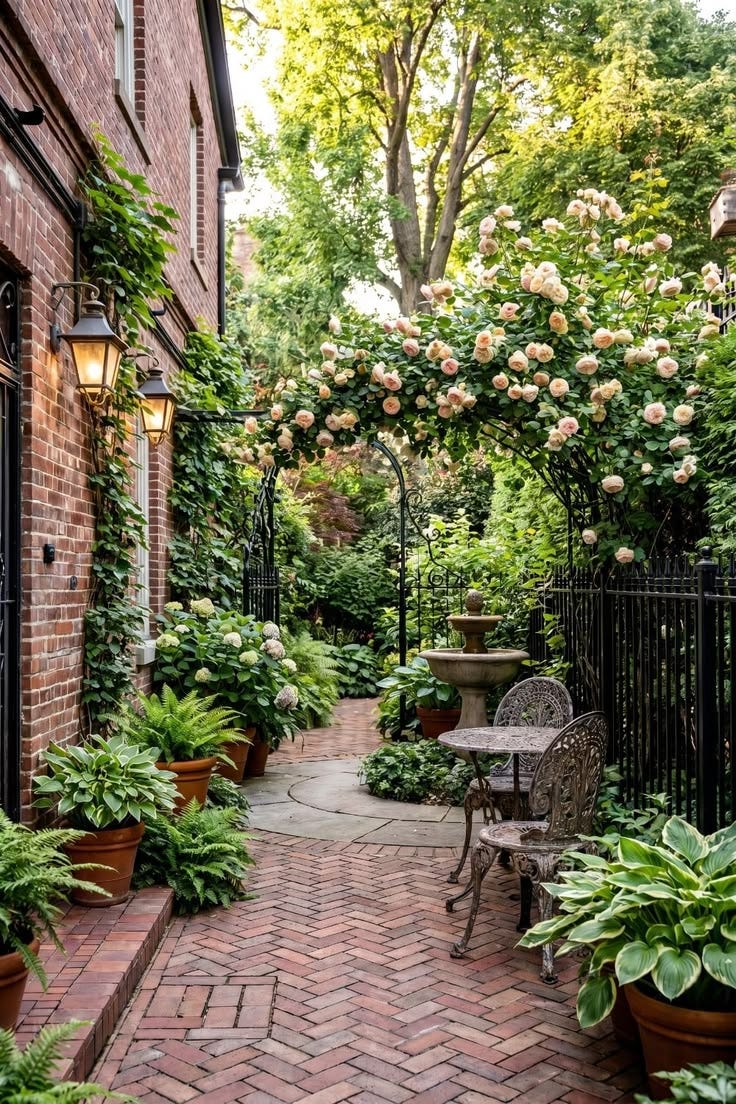
To picture it, imagine a garden path made of little bricks, each one placed carefully beside the next, repeating again and again until it becomes something solid enough to walk on.
Crystals feel ancient because they are.
The minerals inside them belong to a story that started long before us. Before our homes, before our names, before we ever held one in our hands and wondered if it meant something.
The same elements that live in stones, soil, oceans, stars, and our bodies keep becoming something new.
And I don’t know. That kind of makes me pause.
We’re all part of the same universe rearranging itself again and again.
Because we are carbon-based beings. We are made of water, minerals, oxygen, hydrogen, nitrogen, carbon, calcium, iron, and all these tiny building blocks that also exist throughout nature. In the earth beneath us. In the food we grow. In the rocks we pick up. In the stars that came before us. We can’t exist without absorbing more energy.
So when I hold a crystal, I don’t think of it as something completely separate from me.
It comes from the same earth I do. The same planet that grows the moss and flowers, feeds the trees, holds the oceans, shapes the mountains, and somehow made our bodies too. We are not visitors here, walking around outside of nature. We are nature, breathing and thinking and carrying little pieces of the earth in our hands.
That’s what makes crystals feel so grounding to me. Not only because they’re beautiful, but because they remind me I’m not separate from the world I keep trying to return to.
I am made of it.
The earth, the minerals, the elements, the energy. All of it feels so mystical when you really think about it, but it isn’t make-believe.
It’s ancient.
And somehow, we’ve always known.
Stones Have Always Held Meaning
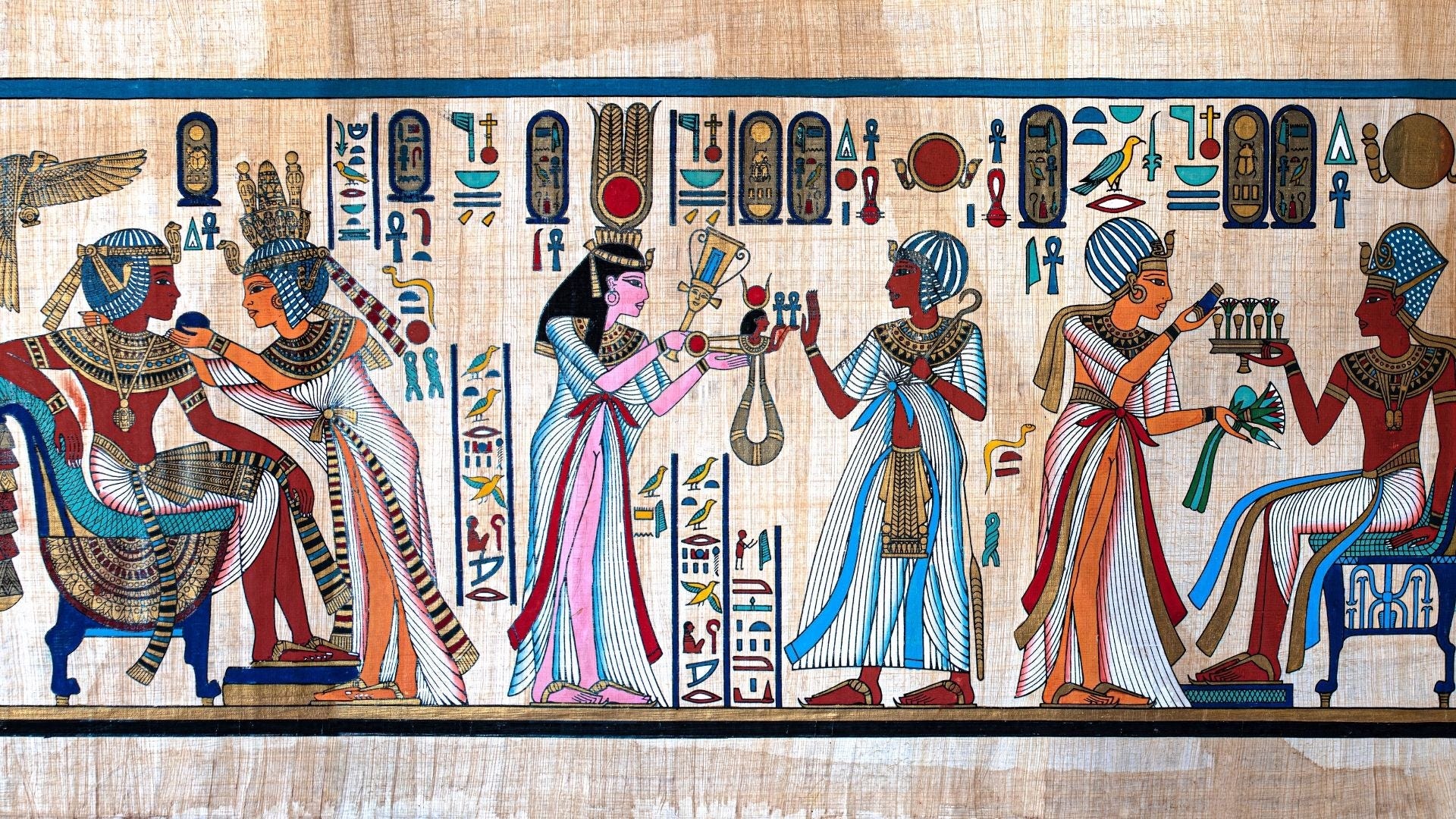
In ancient Egypt, amulets were believed to carry power to the person wearing them. Their meaning did not come from one thing alone. It came from the material, the color, the shape, the symbol, the inscription, the words spoken over it, and the ritual performed with it. A stone was not only a stone. It could become protection, regeneration, strength, safe passage, or a way to carry something unseen close to the body.
Egyptian amulets were often worn or placed directly on the body so their power could transfer to the person. That detail feels important because it sounds so much like what people still do now with crystals. The color matters. The body matters. The intention matters. The spoken words matter. The belief that something small can carry something unseen has always been part of it.
And Egypt was not the only place. At Dorstone Hill in England, archaeologists found more than 330 fragments of worked rock crystal at a nearly 6,000-year-old ceremonial site. Some of the fragments were found in ancient graves. The crystal was transparent, rare, and prismatic, able to catch white light and split it into rainbow color.
I keep imagining what that must have felt like thousands of years ago, to hold a stone that looked like frozen water, something clear and shining from the earth that almost seemed to belong to the sky. These crystals were not local, either. They had to be brought there, carried across distance, chosen for a reason, and archaeologists believe the material may have been intentionally placed there over generations.
It means people were not only picking up pretty rocks. They were returning to them again and again, across time, across ritual, across death, across whatever they believed came next.
Later, Greek writers began trying to study stones in a more organized way. Theophrastus wrote On Stones in the fourth century BCE, describing minerals, gems, heat, attraction, and the properties different stones seemed to hold. His work became one of the earliest known writings focused on stones and influenced later traditions of writing about gems and minerals.
So the history of crystals has never belonged to only one world. It has always lived somewhere between observation and belief, between science and spirit, between what a stone is made of and what people feel when they hold it.
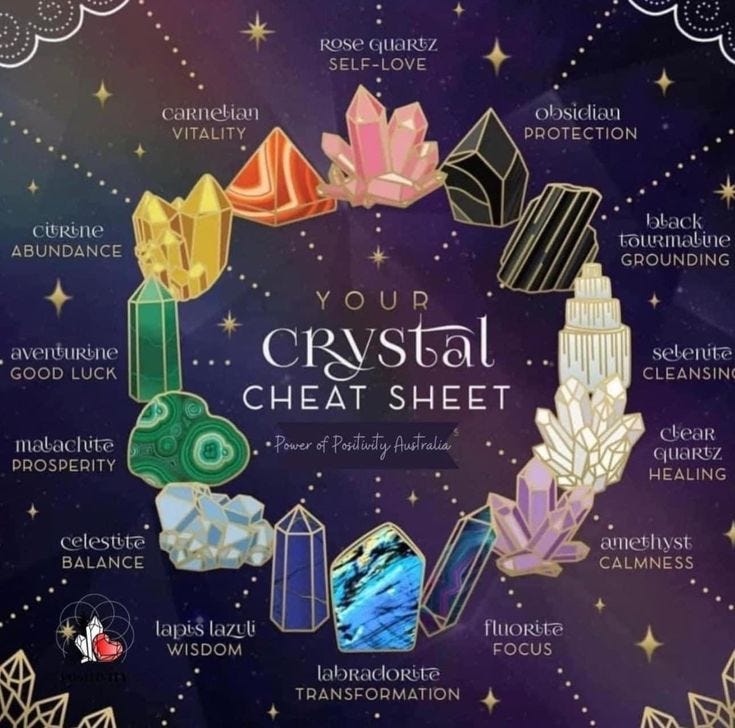
People noticed color. They noticed shine. They noticed weight. They noticed where a stone was found and what happened when it was heated, worn, carved, placed near the body, or carried into ritual. And from that noticing, meanings formed slowly, imperfectly, beautifully, passed from hand to hand, from burial sites to temples, from ancient texts to folk traditions, from medicine bags to jewelry boxes, from sacred spaces to windowsills.
Crystal healing did not appear out of nowhere. It grew from this long human history of seeing stones as more than decoration. Color mattered. Structure mattered. Placement mattered. The body mattered. Words mattered. Belief mattered.
And in healing, all of those things come together: the stone, the body, the energy, the color, the need, the words spoken over it, and the thing we are asking to be shifted, protected, released, or restored.
It’s funny to me how many people consider crystals to be “woo-woo”. Because crystals aren’t separate from modern life at all.
They are everywhere.
Quartz helps watches keep time. Crystals are used in microphones, radios, computers, phones, screens, lasers, medical tools, solar panels, batteries, and so many of the devices we touch every day. We use them to carry sound. To focus light. To store information. To regulate time. To transform and amplify energy.
We are living in a kind of technological crystal age and most of us don’t even realize it. We don’t call it mystical when it’s inside a watch or a microphone. We call it useful. But that almost makes it more fascinating to me. Crystals are already part of the invisible exchanges of everyday life. We don’t really think about it because we call it technology. But so much of our world runs on tiny, structured pieces of earth. 🤯
When I first started reading about crystal properties, I needed to know where the information was coming from. From Who? How do they know?
How did anyone know which stone was meant for protection, or love, or clarity, or grounding? Was it the color? The energy? The way people felt when they held them? The traditions passed down around them?
The answer seems to be all of it.
The meanings did not come from nowhere. They came from energy, color, body, tradition, and feeling all braided together. From people noticing how certain stones felt, where they placed them, what they were hoping to heal, and what part of the body or spirit seemed to respond.
I love that it isn’t only one answer.
It’s not just science. Or symbolism. It’s not just an ancient tradition. It’s the way all of those things meet in the body.
In crystal healing, intention matters because it gives the energy direction. It tells the crystal what you are asking for, what you are releasing, what you are calling in, or what you are ready to bring back into balance.
Maybe that’s what crystals become more than anything.
Reminders.
Of the earth. Of the body. Of the unseen things we carry. Of the way something small can still hold meaning.
And when I think back to that little girl in Helen, Georgia, standing in front of baskets of stones and believing one might be meant for her, I wonder if she understood something before I did.
Wonder was never something I had to outgrow. It was something I was always trying to return to.
I hope this helps you return too.
As always, Thanks so much for reading.
Sources / Further Reading
The Metropolitan Museum of Art — Ancient Egyptian Amulets
University of Manchester — Prehistoric Brits used rare rock crystals to mark burial sites
Cambridge Archaeological Journal — Not All That Glitters is Gold? Rock Crystal in the Early British Neolithic at Dorstone Hill
Archaeology Magazine — Neolithic Crystal Age
The Mineralogical Record — Theophrastus
NIST — The history of quartz clocks and timekeeping
Britannica — Crystal microphones and piezoelectric crystals